Antalya Dental Clinic

GET A FREE QUOTE

Send us your photo from different angles like in the example! Get your advice and quote!
https://www.dentarma.com/taxonomy/term/2385
CAPTCHA
This question is for testing whether or not you are a human visitor and to prevent automated spam submissions.

Patients Reviews

  • Google Reviews
  • Trustpilot Excellent
  • Zoe Beecher
    Well what can I say about this amazing professional team? I simply couldn’t afford the treatment in the UK as my teeth were so bad. I had come to terms with the fact that at 39 years old I would have to have a full set of dentures. I have my own business in sales and it had gotten to the point,... +More
  • Michael Clarke
    My experience with Dentarma was great, everything they done from my first consultation to my last treatment was excellent. Always explained in full detail what was required and all staff were very professional and polite and friendly. I would highly recommend them to everyone thinking about going... +More
  • Sukhi Dhaliwal
    Fantastic experience, friendly and approachable staff. Made me feel so welcome even though I was so nervous. Clean and hygienic clinic in a very convenient location.
  • Connor dennett
    Warm welcoming, best experience of my life other than the day of operation which I had infections so was really painful other than that was a good experience I can’t wait to go back for my second visit in November, thankyou for having me in your clinic it’s been a blessing
  • Sukhi Dhaliwal
    Fantastic experience, friendly and approachable staff. Made me feel so welcome even though I was so nervous. Clean and hygienic clinic in a very convenient location.
  • James
    Can not thank Emre and his team enough, from the minute I walked in I felt at ease, as I was extremely nervous. The clinic was modern and clean, can not recommend them enough. Gave me my smile and confidence back!
  • ANDREW CAMPBELL
    One word to sum up my experience with Dentarma.... Amazing. From the very first contact on WhatsApp to the minute I stepped into the clinic. Dr Emre Seker and his staff are friendly, reassuring and totally professional. Any concerns and questions answered. I was really nervous about everything but... +More
  • Kieran james
    ’ve heard only lovely things and my friend received great treatment with a full mouth of crowns. Friendly staff and lovely drinks
  • Michelle Hughes-Mazur
    Amazing amazing amazing... I know have a lovely big smile... huria well what can I say, she's like my personal medical secretary, what you want she will see to it, from the first hello to the final goodbye but it isn't a goodbye coz the team now are my Turkish family. Dr seker and his... +More
  • PM
    After seeing Dentarma's amazing video's online it was the final push I needed to go ahead and take the plunge. The very first time I walked through the door I was met by the amazing friendly staff who immediately made me feel at ease. I met Ru the amazing creator of the videos they... +More

FREE CONSULTATION REQUEST

Send us your photo from different angles like in the example! Get your advice and quote!
https://www.dentarma.com/taxonomy/term/2385
CAPTCHA
This question is for testing whether or not you are a human visitor and to prevent automated spam submissions.

Antalya Dental Clinic

.

Dental Travel in Turkey

Dental Travel in Turkey: A Comprehensive Guide

In recent years, Turkey has emerged as a top destination for dental tourism. Known for its advanced healthcare system, experienced dental professionals, and cost-effective treatments, Turkey offers a unique blend of quality care and the opportunity to explore a rich cultural landscape. This guide explores the key factors that make dental travel in Turkey an attractive option, breaking them down item by item.

1. Why Choose Turkey for Dental Tourism in Turkey?

Turkey is fast becoming one of the most popular dental tourism destinations in the world, with millions of people traveling annually for treatment. There are several reasons for this surge in popularity:

Cost-Effective Treatments: Dental procedures in Turkey can be up to 70% cheaper than in countries like the USA, UK, and parts of Europe. This cost advantage makes it appealing to those looking for affordable yet high-quality dental care.

State-of-the-Art Facilities: Turkish dental clinics are equipped with the latest technologies and follow international standards. Many clinics use advanced techniques and materials, offering patients the most modern solutions in dentistry.

Highly Qualified Dentists: Turkey boasts a large number of internationally accredited and experienced dental professionals. Dentists often complete additional education and training abroad, ensuring they are knowledgeable about global best practices.

Short Waiting Times: Unlike some countries where patients may need to wait weeks or months for appointments, Turkey’s clinics offer quick access to dental treatments, allowing for efficient scheduling and timely procedures.

Attractive Tourist Destination: Patients often combine dental treatment with leisure travel, taking advantage of Turkey’s rich history, stunning landscapes, and vibrant culture.

2. Popular Dental Procedures in Turkey

Turkey offers a wide range of dental treatments, from cosmetic enhancements to complex restorative work. Here are some of the most common procedures sought by dental tourists:

Dental Implants: A popular choice for those needing tooth replacements, dental implants in Turkey are renowned for their affordability and precision. The implants used are often of high quality, comparable to those used in Western countries.

Veneers: Veneers are thin shells applied to the front of teeth to improve appearance. Turkey is known for offering high-quality veneer treatments, especially for patients looking to correct discolored, chipped, or misaligned teeth.

Teeth Whitening: Cosmetic teeth whitening is a common procedure in Turkey, where advanced techniques ensure long-lasting and bright results. Many patients combine this treatment with other procedures to achieve a perfect smile.

Crowns and Bridges: Crowns and bridges are used to restore damaged or missing teeth. In Turkey, these are often made using high-grade materials such as porcelain or zirconium, providing durability and a natural look.

Orthodontics: Orthodontic treatments, including braces and Invisalign, are also widely available. Many patients opt for these treatments to correct misaligned teeth or bite issues.

3. Cost Comparison in Turkey

The cost advantage of dental treatment in Turkey is one of the primary reasons for its popularity. A detailed comparison of prices between Turkey and other countries reveals substantial savings:

Dental Implants: In the UK or the US, dental implants can cost between $3,000 and $5,000 per tooth. In Turkey, the same procedure typically costs between $600 and $1,000 per implant, including consultation and follow-up care.

Veneers: A veneer in the US can cost around $1,500 per tooth, while in Turkey, it ranges from $200 to $400, depending on the materials used.

Teeth Whitening: Professional teeth whitening in the US can cost upwards of $500, while in Turkey, it can be as low as $150.

Crowns: In the US and Europe, crowns cost between $1,000 and $2,000. In Turkey, they can range from $200 to $500.

These significant savings often mean that even after including travel and accommodation expenses, patients still spend considerably less than they would in their home country.

4. Top Cities for Dental Treatment in Turkey

Several Turkish cities are recognized for their dental care facilities, each offering its own set of advantages:

Istanbul: As Turkey’s largest city, Istanbul boasts a high concentration of world-class dental clinics. Patients have easy access to both the best treatments and the rich cultural offerings of this historic city.

Antalya: Known as a popular tourist destination, Antalya also has a growing reputation for excellent dental services. Many dental tourists enjoy the combination of top-notch dental care and the opportunity to relax by the sea.

Ankara: The capital city of Turkey, Ankara, offers many dental clinics that cater to international patients. With a lower cost of living than Istanbul, treatment here can be even more affordable.

Izmir: Izmir is another major city with a reputation for quality dental care. Like Antalya, Izmir combines medical tourism with beautiful coastal views, making it a desirable destination for dental patients.

5. The Treatment Process in Turkey

The process of receiving dental treatment in Turkey is generally efficient and straightforward:

Initial Consultation: Most patients start with an online consultation, during which they send photos or x-rays of their teeth for the dentist to review. This helps to create a treatment plan tailored to their needs.

Travel and Accommodation: Many dental clinics assist with travel arrangements, offering packages that include accommodation and airport transfers. Patients can often find budget-friendly flights to Turkey from major cities in Europe and beyond.

Treatment Timeline: Depending on the procedure, dental treatment in Turkey typically takes anywhere from a few days to a couple of weeks. For example, implants might require two visits over several months, while veneers or whitening can be completed within a few days.

Aftercare and Follow-up: Clinics in Turkey emphasize patient aftercare. Many provide detailed instructions and follow-up services, ensuring that patients can easily manage their recovery after returning home.

6. Travel and Tourism Opportunities in Turkey

One of the main draws of dental travel in Turkey is the opportunity to combine treatment with tourism. Patients can explore Turkey’s rich culture, history, and natural beauty before or after their dental procedures.

Istanbul: Patients in Istanbul can visit iconic landmarks such as the Hagia Sophia, the Blue Mosque, and the bustling Grand Bazaar. The city offers a unique blend of European and Asian cultures.

Antalya: Those in Antalya can relax on the Mediterranean beaches or visit ancient ruins like the Aspendos Theatre. The city offers a perfect mix of relaxation and exploration.

Cappadocia: For patients looking for a more adventurous experience, Cappadocia’s hot air balloon rides over its unique landscape of rock formations provide a once-in-a-lifetime experience.

7. Things to Consider Before Traveling in Turkey

While Turkey offers many advantages for dental tourists, there are a few important considerations:

Zirconia Crown

Dental crowns are used to cover a tooth or a dental implant. Dentists commonly utilize crowns to support broken, weak, or misshapen teeth. Additionally, dental crowns can be used to cover teeth that are severely worn or discolored. They may also be employed with bridges to strengthen multiple teeth.

When it comes to the materials used for crowns, there are several options, including ceramic and metal. Another option is zirconium coating. Although zirconium crowns are classified as a type of ceramic crown, they are crafted from zirconium dioxide, an extremely durable metal related to titanium.

What is a Dental Crown?

Dental crowns are restorations used to restore the shape, size, and appearance of a tooth. When fillings fail to solve the problem, crowns placed on damaged teeth provide protection. Crowns can be made from materials such as metal, porcelain, resin, and ceramic, requiring no special care beyond regular and adequate oral hygiene.

Crowns are typically produced in a tooth-colored shade to match natural teeth. When determining the material for the dental crown, individual factors such as the tooth's location and function, the position of the gum tissue, the amount of teeth visible when smiling, and the color of the surrounding teeth are evaluated.


Over time, teeth can become misshapen or damaged due to decay, injury, or usage. A dental crown is placed over the tooth to cover its visible part. Crowns, which protect teeth from fractures, are an effective method for restoring lost aesthetic appearance and function.

What are the Types of Dental Crowns?

There are different types of dental crowns, including gold, porcelain, porcelain-fused-to-metal (PFM), zirconium, and E-Max (Lithium Disilicate).

Gold Crowns: Gold dental crowns, which are combinations of other metals such as copper, nickel, or chromium, are highly durable and strong. However, they are rarely preferred today due to aesthetic reasons.

Porcelain Crowns: This is the most commonly used type of crown today. Made entirely of porcelain, these crowns provide the best and most natural appearance. They match surrounding teeth in shape, size, and color. Porcelain crowns are biocompatible and are considered the best option for anterior tooth restorations. They are non-toxic as they do not contain metal. However, for porcelain crowns to last a long time, proper maintenance is essential.

Digital Smile Makeover

Many people feel the need to hide their smiles or mouths while laughing or speaking because they are not satisfied with their smiles, the color or shape of their teeth, leading to a sense of discomfort and the need to conceal their mouths while smiling or speaking. It can be said with certainty that those who are not satisfied with their smiles or the color and shape of their teeth and feel the need to hide their mouths while smiling or speaking require smile design. Through smile design, it is possible to address and resolve issues that cause discomfort in individuals, while also achieving an aesthetically pleasing and healthy smile.

One of the most important features of smile design, which is a personalized treatment, is that it allows the patient to see how their smile can change as a result of treatment before it begins. Although beauty perception varies among individuals and cultures, there are clear rules underlying it. The most important aspect of a beautiful smile is the teeth, which must be in harmony with the person's facial shape and lip structure to achieve an aesthetic smile.

Digital smile design, which can be applied to anyone who wants a more beautiful and pleasant smile, can reveal the most suitable and natural-looking smile for the person's face and character. When performing smile design, important considerations include the length of the person's teeth, lip structure, gum characteristics, and harmony between lips and teeth. For a beautiful smile, there should be no misalignment in the teeth, the gum and tooth surfaces should appear clean, and the teeth should be complete, white, and free of stains.

Holywood Smile Costs in Antalya Turkey

What is Aesthetic Smile Design in Turkey?

Digital Smile Design refers to the aesthetic smile design created by dentists using digital technologies. It involves the analysis of the patient's teeth and facial proportions through the use of digital design software.

Dentists aim to achieve a natural and beautiful smile by ensuring harmony between the patient's gums, lips, teeth, and face using advanced digital programs. Since each person's smile is unique, a patient-centered approach is adopted, and the design is tailored to the individual. Once the design is shared with the patient and approval is obtained, the digital smile design treatment begins.

Emax Veneers

  • What is Emax Veneer?

  • What is Emax tooth veneer?

Emax is a dental veneer technique that helps meet aesthetic and functional needs in dentistry. Emax veneers are made from high-strength lithium disilicate ceramic material and are used to enhance the appearance and functional characteristics of teeth.

Emax can be used to conceal scratches, stains, and deformities in the appearance of teeth. At the same time, when applied to the outer surface of teeth, it restores the natural color and shape of teeth. While correcting the appearance of teeth, Emax also improves their functional properties.

Emax veneers are a widely used technique in dentistry and its application is quite simple. The dentist evaluates the structure and condition of the tooth, and the tooth is prepared initially. Subsequently, the ceramic veneer is modeled to fit the tooth and made permanent. Emax is a veneer technique that offers high performance in dentistry and is an ideal option for improving the aesthetic and functional properties of teeth.

While enhancing the appearance and functional characteristics of teeth, Emax also ensures their durability and longevity. Emax veneers help protect teeth from harmful substances, decay, and gum diseases.

What are the types of Emax?

Emax is a dental veneer technique made from lithium disilicate ceramic material and can come in many different types. The following Emax types are among the commonly used:

Dental Implants Treatment Turkey

What is a dental implant?


A dental implant is a treatment used to replace missing teeth. This treatment involves placing a titanium screw, which is accepted by the body, into the jawbone, providing the foundation support for a dental prosthesis called a tooth prosthesis. Implant therapy is used to fill the gap caused by tooth loss and also to ensure the strong and secure preservation of the dentition.

The most significant advantage of implant therapy is restoring the natural appearance and function of the dentition. Additionally, it prevents issues such as the frequent replacement of dental prostheses, which may weaken the dentition over time. Implants can be used in activities such as eating and speaking, similar to natural teeth, and they have a long lifespan.

Implant therapy is performed as a surgical procedure by a dentist. The success of the treatment depends on factors such as the amount and quality of bone where the implant is placed, the patient's dental and gum health, and the proper structuring of the implant. Implant therapy may consist of several stages and may take several months. However, as a result, the patient achieves a strong and natural-looking dentition.

Types of Dental Implants

Dental implants can be categorized into different types based on the materials of the screws and dental prostheses. These include:

Titanium implants:

The most commonly used material, well-accepted by the body.

  • Zirconium implants: Provide a white color similar to natural dentition and offer greater durability and aesthetic advantages.
  • Ceramic implants: Are white-colored and well-accepted by the body, providing a natural appearance similar to natural dentition.
  • Endosseous implants: Placed directly onto the bone to fill the void and support the dental prosthesis.
  • Subperiosteal implants: Placed under the bone and positioned onto the dental prosthesis.

Each type of implant has its own advantages and disadvantages, and the selection of the most suitable one depends on the patient's needs and the evaluation conducted by the dentist.

Dental Implant Treatment

Dental implant therapy is a surgical treatment performed to address tooth loss. The implant, designed as a titanium screw, is inserted into the body and provides the basic support for a dental prosthesis called a tooth prosthesis. The aim of the treatment is to fill the gap caused by tooth loss and ensure the strong and secure preservation of the dentition.

All on 4 Implants

All-on-4 treatment, which has become quite popular in modern dentistry, offers many advantages for patients as an implant treatment method. This treatment option is faster, more economical, and more effective compared to traditional implant treatments, especially for patients who are completely edentulous or at risk of becoming completely edentulous in the near future.

In recent years, oral and dental health has become one of the determining factors in individuals' quality of life, significantly influencing dental prosthetic planning by dentists. Practices that enhance patient satisfaction have garnered more attention.

Implantation is one of the methods developed to replace lost teeth due to chewing, taste perception, speech, pain, and aesthetics. However, implant treatment tends to be more prolonged and costly for patients who are completely edentulous or at risk of becoming completely edentulous in the near future. All-on-4 treatment is a rapid and effective treatment method aimed at eliminating the need for advanced surgery due to sinus lift, bone addition, and insufficient bone in patients who are completely edentulous.

The All-on-4 treatment concept involves the fixed full-jaw prosthetic restoration on 4-6 implants placed in the same surgical operation. Considering function, aesthetics, taste, speech, and confidence, it ensures patient satisfaction.

How is the All-On-4 treatment performed?

The All-on-4 treatment utilizes the titanium screw mechanism used in traditional implants. The most significant difference between traditional implants and All-on-4 implants lies in how they are positioned within the mouth. While 8 or 10 implants are typically used to replace missing teeth in a completely edentulous jaw, this new technique requires only 4 implants.

In the anterior region, 2 implants are placed where the bone is thickest, while in the posterior part of the jaw, 2 implants are placed. The implants in the front are positioned at a 90-degree angle, while those in the back are placed at a 45-degree angle to maximize strength. After these 4 implants are placed, bridges or crowns are fitted onto them.

Temporary prostheses are prepared based on measurements taken from patients before the All-on-4 treatment. If there are any teeth to be extracted, they are removed under local anesthesia, and the implants are placed. Temporary prostheses prepared based on measurements are then attached to these implants. After 3 months, the patient's permanent prostheses are fitted.

All on 6 Implants

The All-on-6 implant technique is based on placing 6 implants in the upper jaw and 6 implants in the lower jaw. With this implant technique, a permanent fixed prosthesis can be applied to the lower jaw in a minimum of 5 weeks and to the upper jaw in a minimum of 12 weeks. This method, which allows the fixation of the dental prosthesis on the same day, is an advanced technology technique. It is suitable for patients with bone loss, especially in the posterior dental regions, to use fixed teeth.


All-on-6 implants are a dental procedure used to reconstruct an individual's mouth when one or both jaws have lost a significant number of teeth. This procedure offers the option to replace all teeth with six natural-looking and feeling dental implants. All-on-6 implants typically do not require bone grafting, making them an excellent solution for patients with low bone density or volume in their jaws. However, if you smoke or have diabetes, this procedure may not be suitable for you. Treatment is recommended for patients with complete tooth loss or planning to replace remaining teeth with implants. All-on-6 treatment provides a long-term and stable alternative to traditional prosthetics.

How Is the Procedure of All-On-6 Implants Performed?

The All-on-six implant procedure is based on applying four or six dental implants to completely edentulous patients. They are placed on the same day at specific angles, followed by the fixation of dental prostheses. Unless requested by patients or deemed necessary by the dentists, there is no movement in fixed teeth. It is a treatment method applied to patients who cannot use prostheses due to excessive bone loss. Using the implants on the same day is possible. Before treatment planning, X-ray bone examinations are performed to avoid any potential problems during the process. Advanced technology systems are used during this process. Treatment is planned considering bone thickness and height.

Who Can Receive All-On-6 Implant Technique?

Patients who can receive all-on-6 implants are those without any obstacles to undergoing dental implant surgery. Therefore, this technique can be applied to patients without systemic diseases and with sufficient bone volume. The following conditions necessitate this treatment:

Patients with a fully edentulous jaw who have sufficient bone quantity and density in the premolar area for implantation can undergo this procedure.

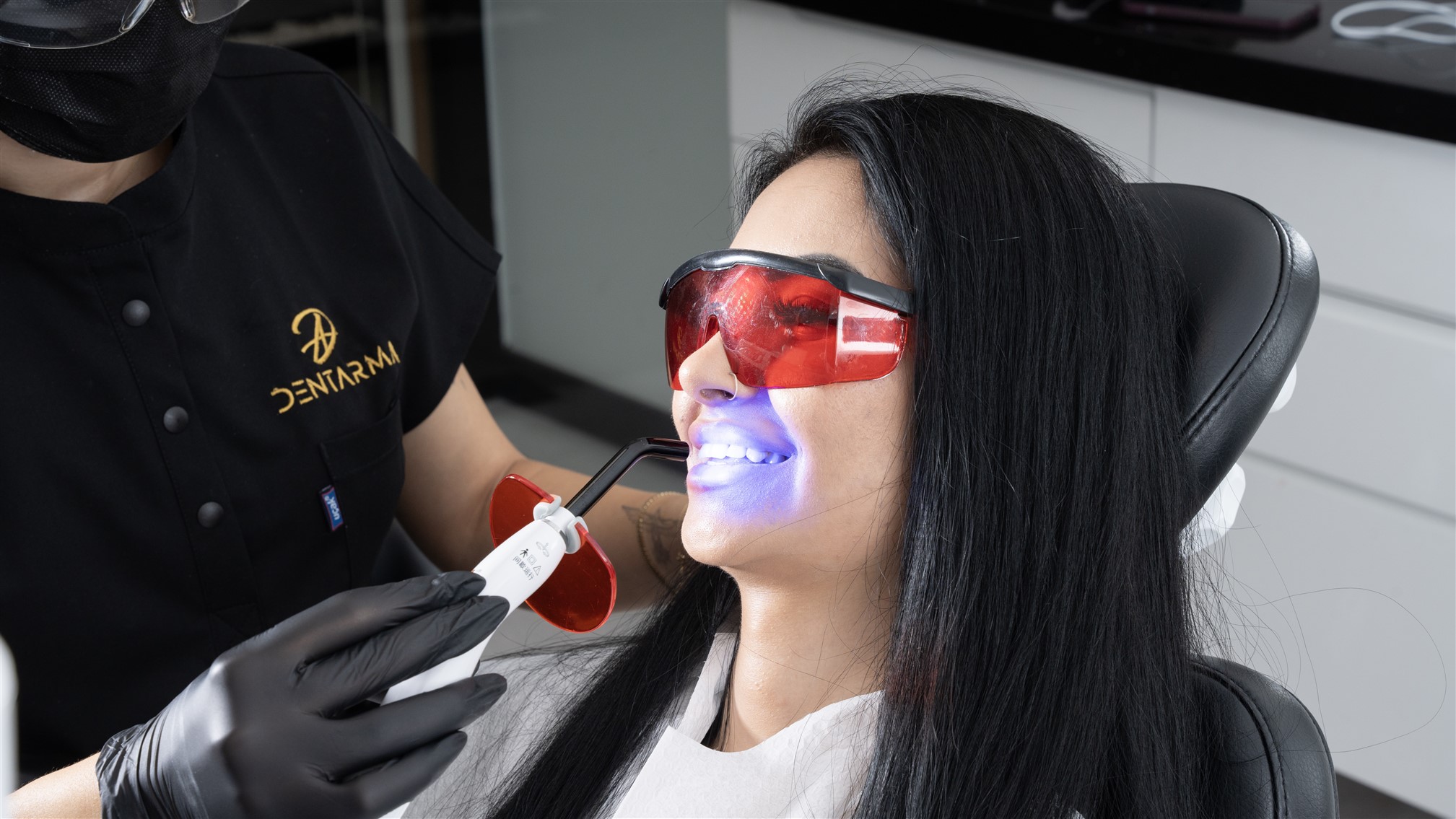
Teeth Bleaching

For anyone aiming to achieve an aesthetic smile, one of the most crucial aspects is the color of their teeth. Bright, sparkling white teeth emphasize not only a healthy smile but also self-confidence.

Teeth have a natural color determined by genetic factors. Just as individuals have varying skin tones, tooth color also varies from person to person. This color cannot be changed by brushing alone.

We can categorize discolorations that occur later in teeth into internal and external discolorations.

External discolorations occur when pigmented substances such as those found in cigarettes, tea, and coffee accumulate on the tooth enamel. Some of these stains can be removed through dental cleaning and polishing procedures.

Internal discolorations, on the other hand, occur within the dentin layer of the tooth.

Anatomical Structure of Teeth

The structure of a tooth comprises four layers. From outermost to innermost, these are enamel, dentin, pulp, and cementum. These layers exhibit different organic and inorganic structural characteristics.

The outermost layer, enamel, is shiny, transparent, and hard. It is the hardest tissue in the body, primarily composed of calcium. Enamel protects the tooth surface. Throughout the day, our teeth are exposed to external factors such as food, acidic and sugary drinks. Enamel acts as a protective shield against these factors. Over time and with use, enamel can become damaged. Trauma, teeth grinding, aggressive brushing, and the use of improper brushing products can lead to abrasions or cracks in the enamel, resulting in discolorations on the tooth surface.

What is Dentin?

Dentin is the layer beneath the enamel. It is softer in structure compared to enamel and provides the color of the teeth. Dentin contains dentinal tubules and dentinal fluid within these tubules. When using whitening agents, our goal is to reach this dentin layer and lighten its color. Since enamel is transparent in nature, it reflects the color of the dentin layer. In individuals with higher age scales, enamel thinning leads to more visible tooth discolorations.

So, What is Pulp?

Pulp, also known as dental pulp, is the central portion of the tooth rich in blood vessels and nerves. It is the nourishing layer of the tooth. In the presence of decay, it can cause pain and sensitivity.

The cementum layer covers the surface of the root and provides the connection between the tooth and the bone.

Pages

DENTARMA TREATMENTS
Healthy Teeth, Happy Lives

Follow Us

  • YOUTUBE
  • Location
  • Facebook
  • instagram

https://api.whatsapp.com/send/?phone=%2B905336697044&text&type=phone_number&app_absent=0